

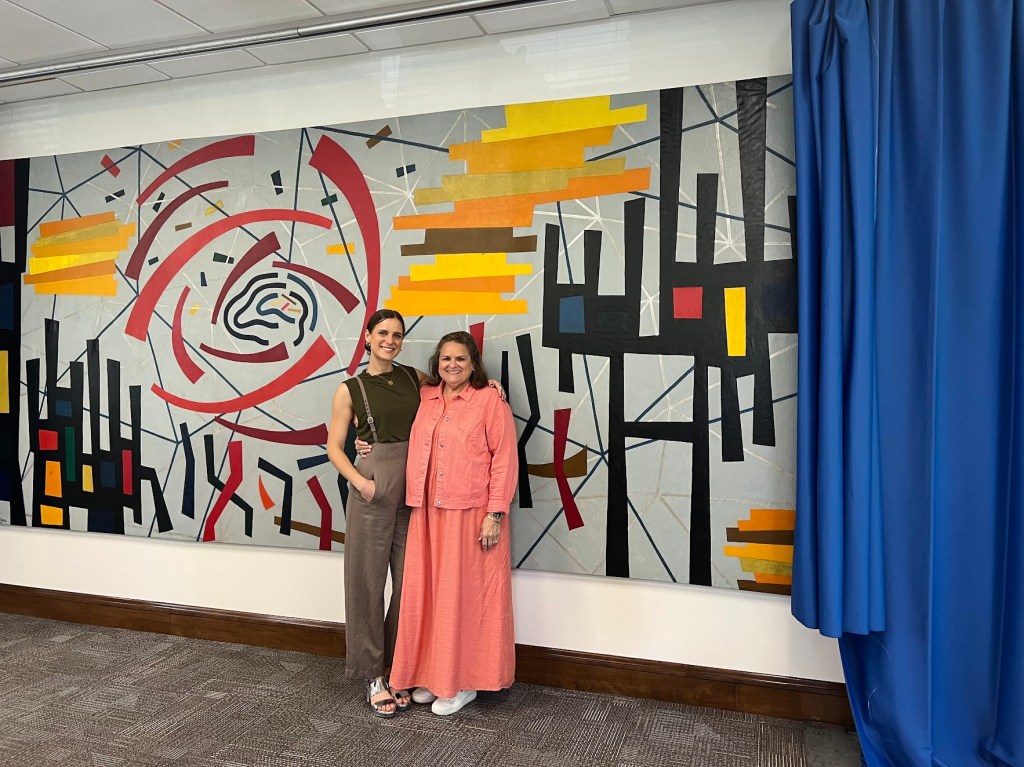
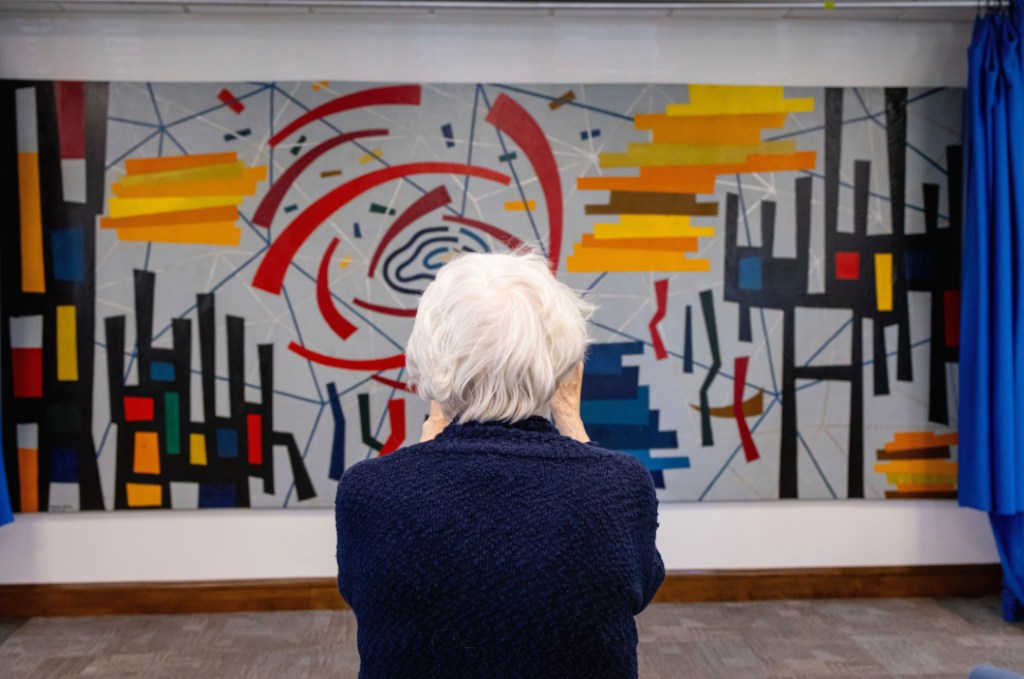
Last year I was hired to restore and preserve a 16 ft X 8 ft mural painted in 1952 by Italian artist Domenico “Memmo” Rotella. He was invited to fulfill a residency at UMKC under a Fulbright scholarship. At that time, his work was fairly popular and successful in his native country, so I’m sure he was excited to come to America to broaden his reach and horizons as a successful, emerging artist.. Unfortunately, success in America was not in the cards. At least not in the way he’d hoped.
You know how to make God laugh?
Tell him your plans…. Don’t worry, I promise this is an underdog story!
During his residency, Domenico decided to paint something to represent the arts and sciences through his conceptual eye. They asked for it! The mural he painted on thick, unprimed canvas was his largest scale work yet. You can imagine how proud of it he must have been. When he finished, it was hung on a wall in one of the university buildings on full display. They dropped the curtain, so to speak, and the artist’s heart immediately began to break. The reaction that the 1950s student body had was far from appreciative or awe-inspired by the style of painting that was not quite yet popular here in the Post-War American midwest region. Take note that this was the time that Regionalist painters such as Thomas Hart Benton and Grant wood had the Midwest art scene in a chokehold. Abstract Expressionism had already hit its stride in stylish hubs like NYC, but had not quite established their acceptance here in Kansas City. Timing is everything, and his vision was just a little too ahead of its time for our midwestern viewers.. Sigh.
So, Domenico returns home and slips into a devastating depression that suffocates his motivation to create.. My heart breaks at this point of the story. Imagine being so disheartened and discouraged by a group of people that your fire is extinguished. Awful, but here’s where things get good for our talented Mr. Rotella..
Eventually, he manages to pull himself out of his depression as his imagination is sparked once more. This time, instead of movements of shapes and colors, it was movie posters and advertisements posted outside the theater and otherwise that sparked his creativity. He would rip and shred the found posters and create large collages of famous people. Around this same time in America, pop art and the like of Andy Warhol had already completely taken over the art scene. With this newfound creative inspiration and consistent practice, Domenico rebranded himself as “Memmo” and quickly rose in popularity not only in Italy once more, but in America as well, becoming an important part of the Neo-Dada art movement alongside Jasper Johns, Rauchenberg and Rosenquist.
Fast forward to the 90’s when all of these household names are well into their 70’s, Memmo’s mural was still hanging in the same place at UMKC. Through the years, the disapproval of the midwestern student body had taken its toll on the painting. There were pencil and pen marks, drips of spilled beverages down the face. The building that housed the mural was set to undergo some renovations that required the painting be taken down and put in storage for the time being until the administration figured out what to do with it. Without knowing for certain, some well-meaning construction workers removed the painting from its original stretcher bars and rolled it onto a steel pipe that was left over from their work. Construction workers are not art conservators, so I am personally simply grateful that they had the wherewithal to know this painting was worth keeping and not thrown into a dumpster with other debris. However, what occurred is that the storage facility the rolled up mural wound up in for decades was not quite climate or humidity controlled. Thus, the acrylic paint racing the steel tube underwent varying heats that caused the paint to alchemize down to a gluelike matter, sticking directly to the metal, since there wasn’t any kind of protective barrier between as would be more standard in storing and preserving large works.
The staff at UMKC found the mural rolled up, peeked inside to see its condition and knew immediately they would need professional intervention to protect the art and get it back to its former glory. That’s where I come in.
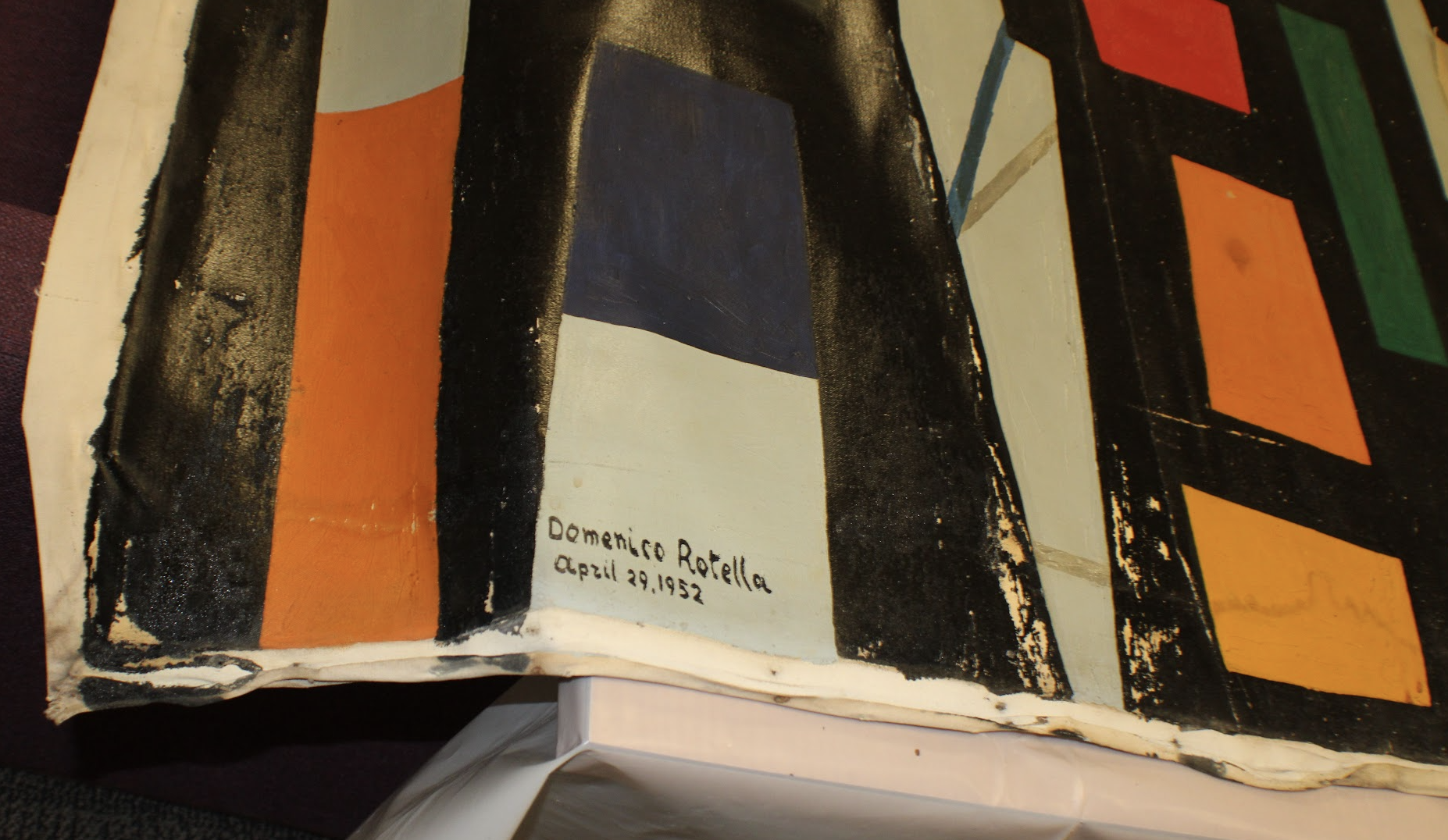
At Art Restoration Solutions, I am a team of one, so this was quite an undertaking as the mural is the size of a mid-sized trailer. However, I was more than up to the task. Once I assessed the damage in person I knew I was more than capable of restoring this painting back to its former glory. The main obstacle was having the space to do so. The staff at UMKC were paramount in facilitating this. I could not have done it without them.
The phases of conservation went as follows:
- Safely remove the canvas from the metal pipe with as least amount of damage as possible.
- Clean the entire face of the painting.
- Properly roll the canvas back onto the metal pipe and transport to its final destination.
- Construct and install the structurally sound stretcher bars the canvas is stretched over.
- Fill in any missing paint from what was lost to the fusion to the pipe.
- Replace any missing pigment.
- Varnish with a UV protective varnish over the entire painting.
- Install onto the wall of the faculty commons area in Newcomb Hall.
Woof. Cue theme song from Rocky.
I’m a very visual person–shocker!–so I will share the process largely through images and videos taken during the conservation process. So let’s start from the top.
That last bit of canvas releasing off the pipe felt like the best visit to the chiropractor you could imagine. Only by that time I realized I had barely been breathing and was drenched in sweat from the use of the heat guns. There may have been a victory dance that nobody was around to see.
Next step: let’s give this baby a bath. Or at least a facial. Unfortunately, in the years of unappreciative audience while it was still hanging in its original location, the mural had endured some beverage spills and grime from finger touches before it was taken down and put into storage where the heat and humidity levels created some unwanted moisture that dripped down the entire face.

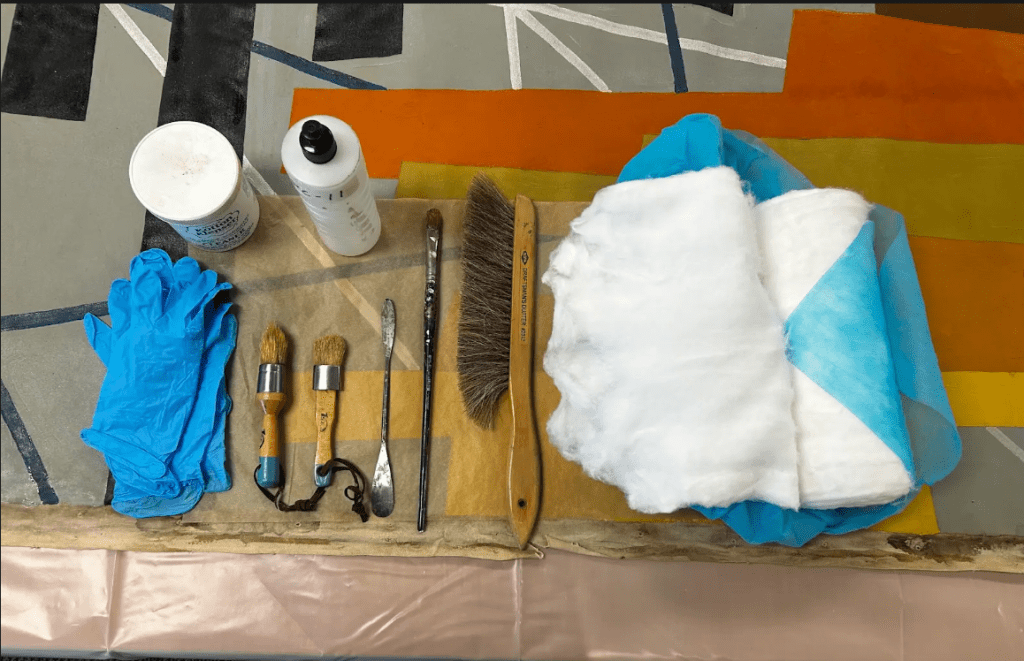
Once the painting was cleaned and fumigated for any potential mold growth, it made the sojourn to its new home: Newcomb Hall. Before I rolled the canvas back out, I had to build its new body. Building it was the easy part, but stretching the thing over the custom built bars required more hands. With the help of a colleague of mine and some curious and hardworking art students, we managed to get the painting tacked and stretched properly.
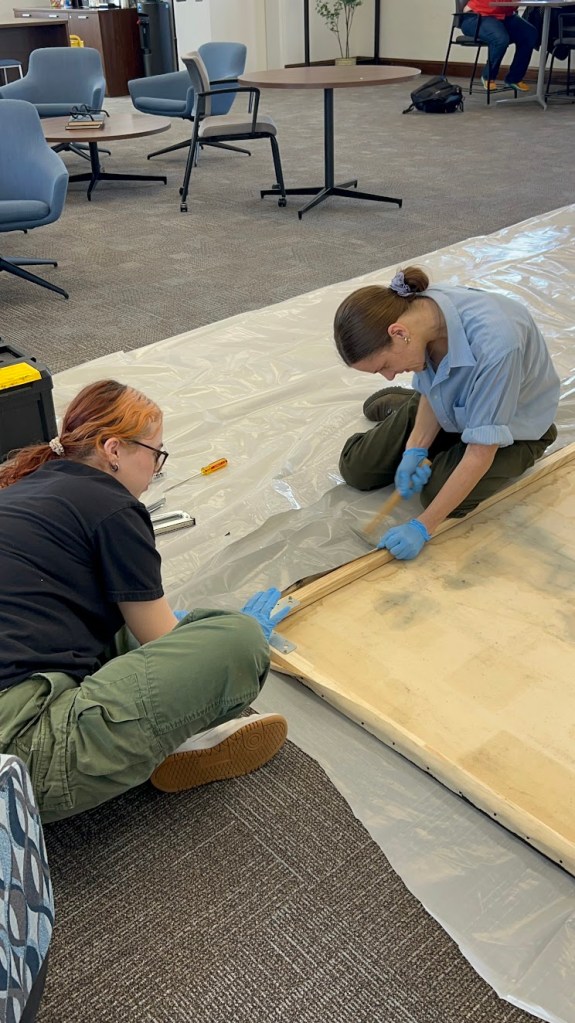
This was by far the most stressful and laboriously challenging part of the job. Completing this step had me feeling like Captain Ahab.
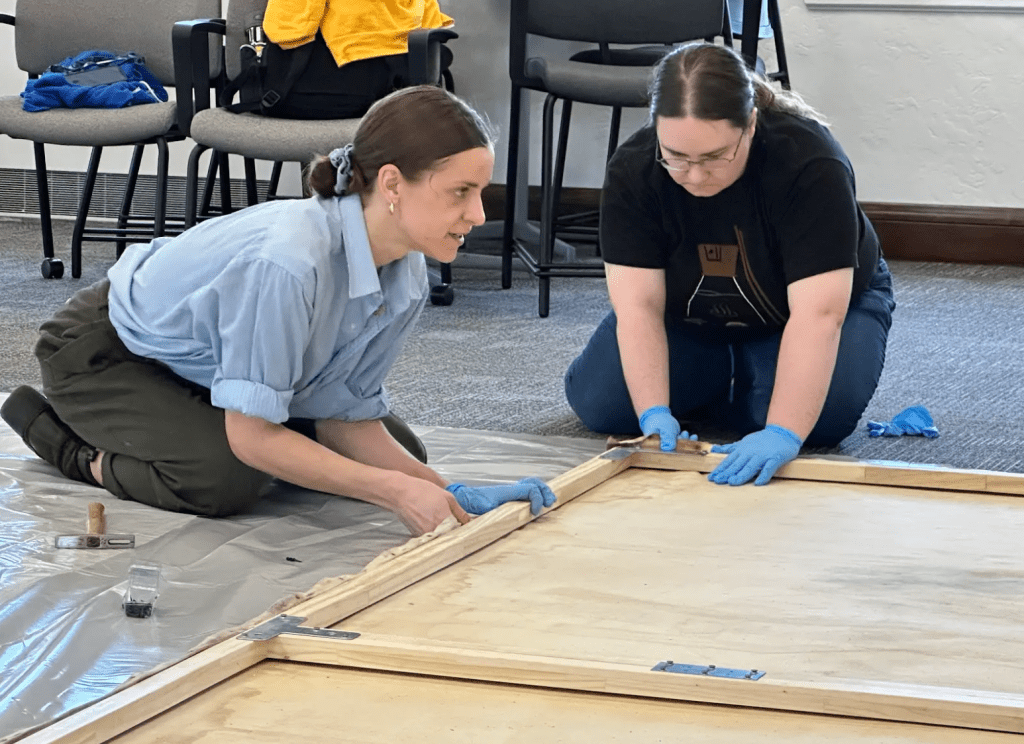
I couldn’t have done that step without the help of those who volunteered. Now that the health and structure of the mural were secured, it was time to move on to the aesthetic intervention.
On went the first coat of varnish so that I could be sure the inpainted missing pigments would match the final look. Alongside this process video of some inpainting, here you see the importance of yoga to my art conservation practice.
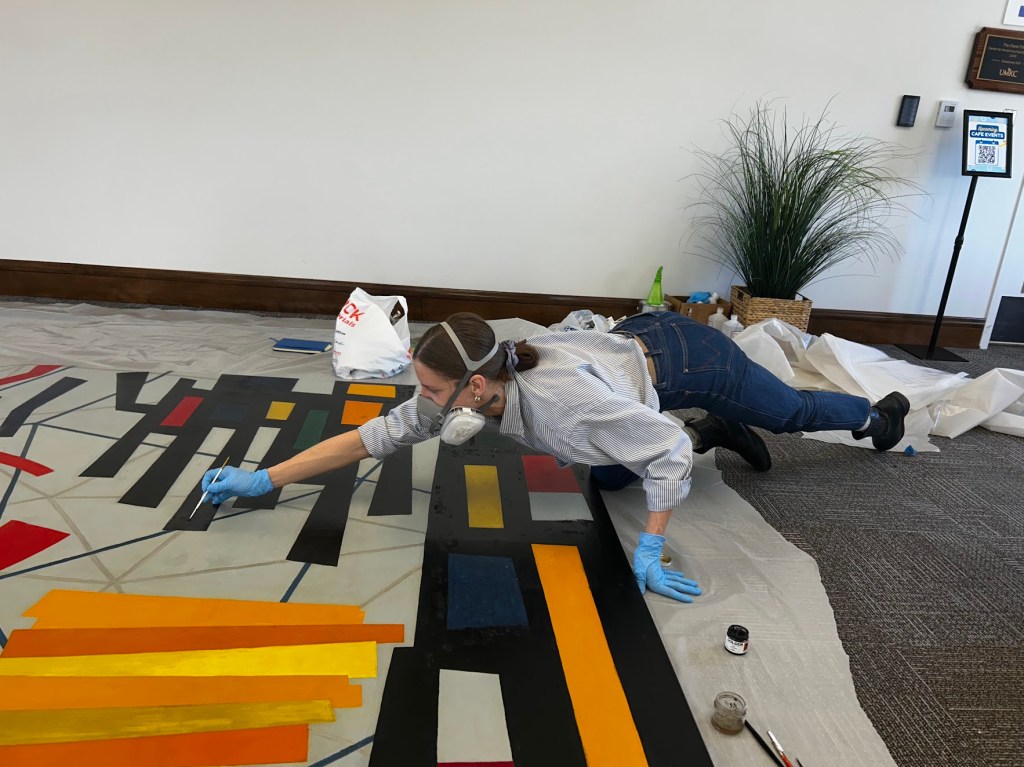
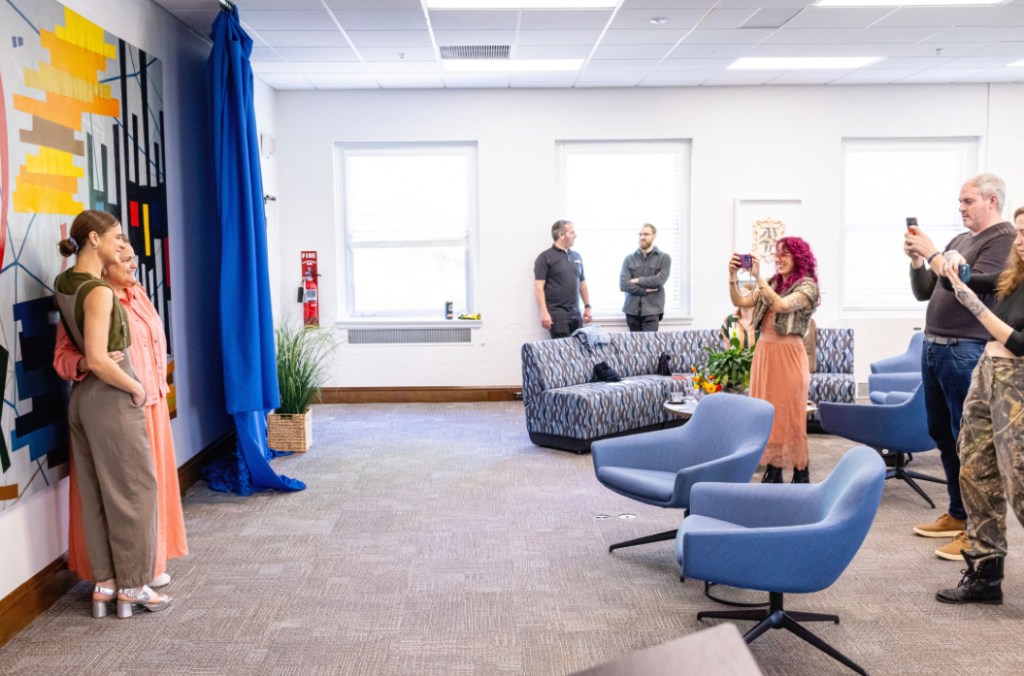
As the project was wrapping up, the date Domenico signed next to his name was not lost on me: April 29th, 1952. I completed the conservation process by the end of March, so as serendipity-doo-dah would have it, I thought it would be remiss not to have a formal unveiling of the project to breathe new life into the cultural property and pay homage to the artist that left under less favorable circumstances.
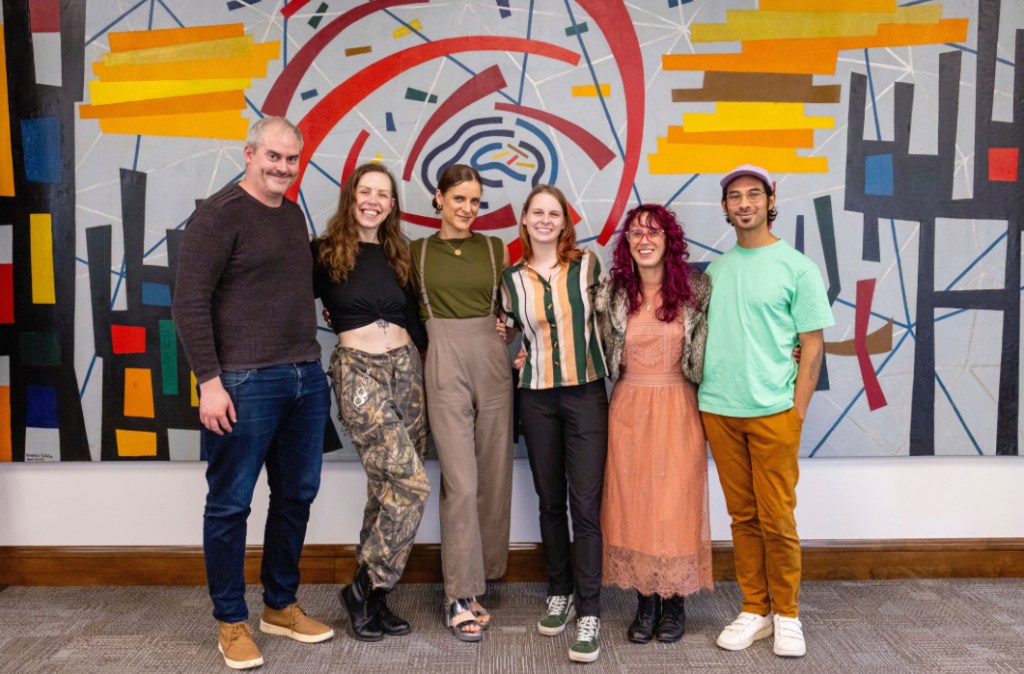
With the help of Alexis Petri, we managed to put together a full blown unveiling event, velvet curtains and all. Chris Wolff and I gave presentations on the artist and the conservation process. We brought attention to the artist’s life, his impact on American art history, and I had the opportunity to discuss proactive measures to take in the event a piece of art is in need of relocation or storage and how to go about it to prevent issues in the future. April 29th, 2025 ended up being one of the most thrilling and exciting moments of my career to date.


 Art Restoration Solutions
Leave a comment